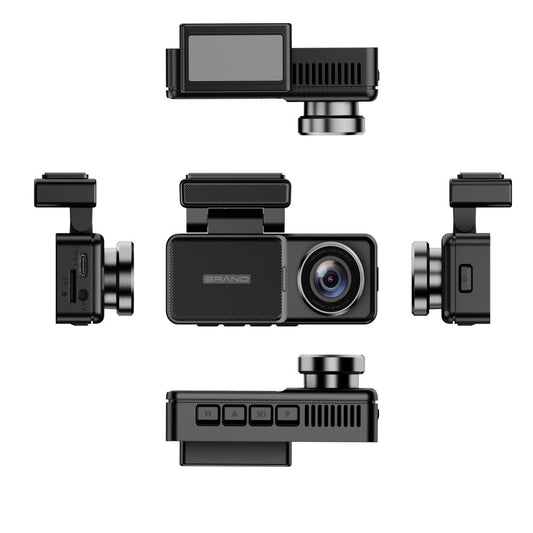
One camera angle rarely tells the whole story. A front and rear dash cam gives you both — what's happening ahead of your car and what's happening behind it, recorded at the same time.
Think about how most accidents actually happen. Someone rear-ends you at a red light. A car backs into you in a parking lot and just drives off. You're stopped in traffic and get hit from behind. None of that gets caught by a front-only camera. A front and rear dash cam closes that gap, so you're not stuck relying on someone else's account of what happened.
What to Look For
Resolution matters more than people expect. A dash cam front and rear setup that films in 1080p on both ends holds up far better than one where the rear camera is stuck in low-res. If the front camera shoots in 4K, even better — license plates and street signs stay readable when you zoom in later.
Night footage is where cheaper cameras usually fall apart. Anyone can get clear video at noon. The real test for a front and rear dash camera is a dark parking garage at 9 PM. Look for a wider lens aperture or a dedicated night mode — that's usually what separates usable footage from a blurry mess.
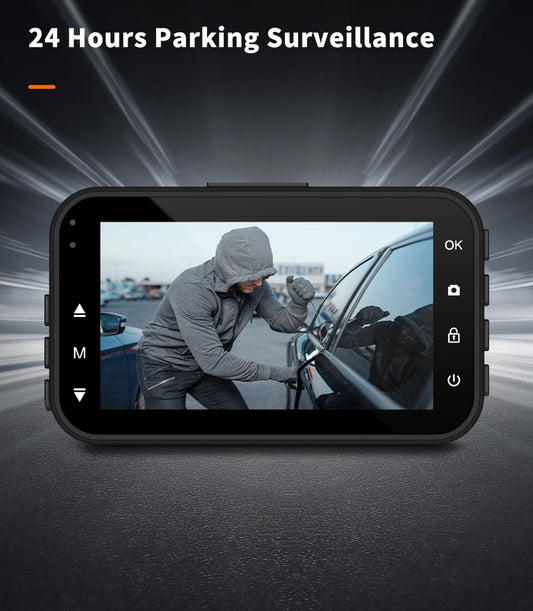
Two features are worth checking before you buy: loop recording and parking mode. Loop recording just means the camera keeps rolling and overwrites old clips once the card fills up, so you're not manually deleting files every week. Parking mode keeps the camera active even when the car's off — which matters, since most parking lot dings happen exactly then. A front and rear dash cam without parking mode is only doing half the job.
Wired or Wireless
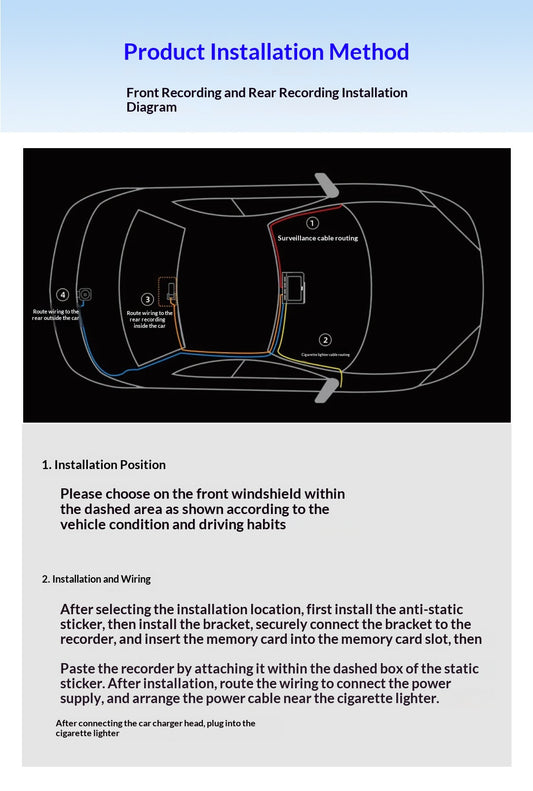
Most car dash camera front and rear kits come as two pieces — one camera behind the mirror facing forward, a smaller one near the rear windshield, connected by a cable that runs along the headliner. It takes a bit more effort to install than a single camera, but it's a one-time job, and most kits include clips to keep the wiring hidden.
Wireless rear cameras exist too, and they skip the cable-running step. The trade-off is they can occasionally drop frames compared to a wired connection. If you want the most reliable setup, wired is still the safer call.
What "Best" Actually Means Here
When people search for the best front and rear dash cam, they're usually weighing a handful of things — video quality, how easy it is to install, whether it has GPS, and whether the unit holds up after a year of summer heat sitting on the dash. Price matters, sure. But a cheap camera that dies in eight months isn't actually the cheaper option.
If you drive for a rideshare service, a front and rear dash camera isn't optional in any real sense. Passenger disputes, accident liability, damage claims — all of that gets a lot easier to sort out when you've got footage covering both the road and the cabin.
Getting the Right Fit
Mount type is worth checking before you order. Suction mounts are easy to reposition; adhesive mounts sit lower and flatter against the glass. Neither is wrong — it just depends on what you want your setup to look like.
A front and rear dash cam is one of those things you forget about until the one day you actually need it. That's usually the day you're glad you went with front and rear instead of just front.
Browse the models below to compare resolution, night performance, and price across the full lineup.