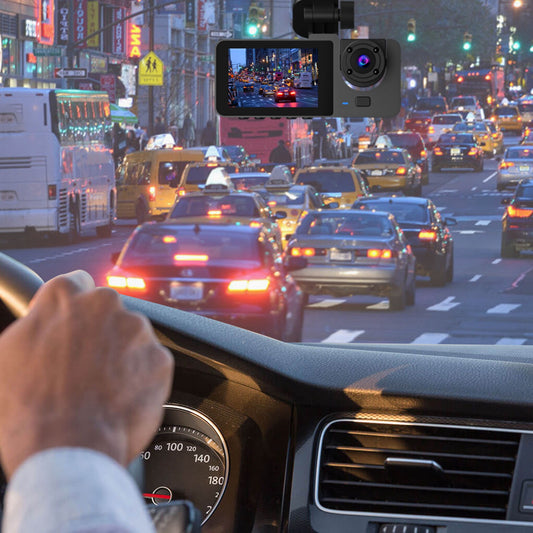
If you have ever wished your dash cam could see more than just what's happening in front of your car, a 3 channel dash cam is the upgrade you have been looking for. Unlike a basic single-lens setup, a three channel dash cam records the front road, the rear view, and the interior cabin all at once, giving you a complete picture of everything that happens during your drive. Whether you are a daily commuter, a rideshare driver, or someone who simply wants peace of mind on long trips, this kind of coverage removes the blind spots that a standard camera leaves behind.
At CamDashPros, our collection of 3 channel dash cams is built for people who want more than basic protection. These systems are designed to hold up to real driving conditions in the US and Canada, with recording quality and mounting options that make installation straightforward even if you are not particularly tech savvy.
Why a 3 Channel Dash Cam Makes Sense for Most Drivers
A single front-facing camera can only tell part of the story. If someone reverses into your parked car, or a passenger dispute happens inside the cabin, a front-only camera simply will not have footage to show what actually took place. That is where the three channel dash cam changes the equation. With one lens facing forward, one facing backward, and one pointed into the cabin, you are covered from nearly every angle that matters.
This setup is especially useful for:
- Rideshare and delivery drivers who need cabin footage for passenger disputes or liability protection
- Families who want an extra layer of safety, especially with new or teenage drivers
- Anyone who has dealt with a hit-and-run or a false insurance claim and wishes they had proof
The extra channel is not just about volume of footage — it is about having the right footage when you actually need it.
4 Channel Dash Cam: Taking Coverage One Step Further
For drivers who want even more thorough documentation, a 4 channel dash cam adds a fourth lens, often used for a side-view or an additional exterior angle. This is particularly popular among fleet operators and truck owners who need to monitor blind spots along the sides of a larger vehicle, or business owners who want extra documentation for insurance and liability purposes.
A 4 channel dashcam setup is not just "more cameras for the sake of it." In commercial and fleet use, that fourth angle can be the difference between a clear-cut insurance claim and a messy back-and-forth over what actually happened on the road. If you manage even a small fleet, this is worth serious consideration.
Choosing Between 3 Channel and 4 Channel Setups
Deciding between a three channel dash cam and a four channel option usually comes down to how you use your vehicle:
If you drive a standard passenger car and mainly want protection against accidents, rear collisions, and in-cabin incidents, a 3 channel setup covers your needs well. If you drive a larger vehicle, operate as part of a fleet, or simply want the most complete documentation possible, stepping up to a multi channel dash cam with four lenses gives you added confidence.
Either way, resolution matters just as much as channel count. A blurry recording is not much help if you cannot read a license plate or make out a face clearly.
3 Channels 4K Dash Cam: Why Resolution Still Matters
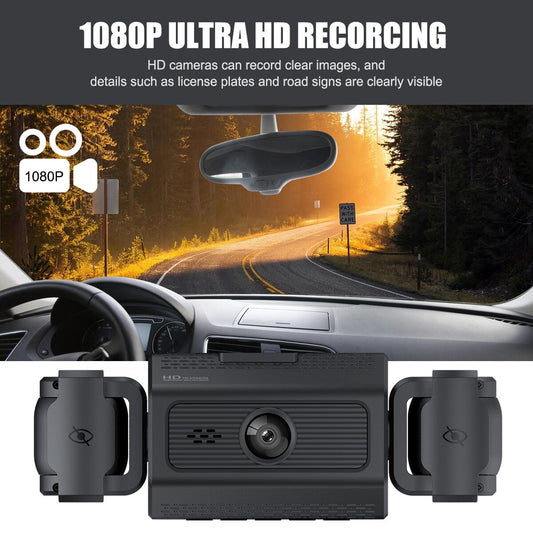
Channel count tells you how much of your surroundings get recorded, but resolution determines how usable that footage actually is. A 3 channels 4K dash cam captures sharp, high-detail video across all three lenses, which makes a real difference when you need to zoom in on a license plate number, read street signs, or clearly identify another vehicle involved in an incident.
Standard HD footage can leave key details blurry, especially at night or in bad weather. With 4K resolution across your front, rear, and cabin channels, you get footage that actually holds up when it matters most, whether that is for an insurance claim, a police report, or simply your own records.
Built for Real-World Driving Conditions
Every three channel dash cam and four channel dashcam in our collection is chosen with everyday driving in mind. That means:
- Reliable night vision performance for low-light recording
- Loop recording so you never run out of storage space
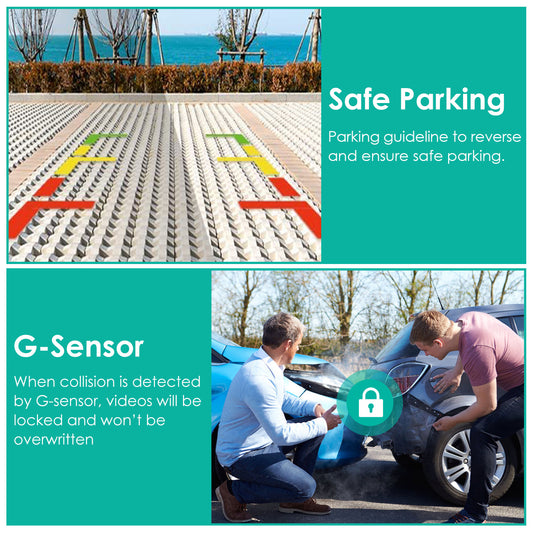
- G-sensor technology that automatically locks footage during sudden impacts
- Simple mounting for front, rear, and cabin lenses without a complicated setup process
We know that most people buying a dash cam are not looking to become camera experts. They just want something that works quietly in the background and gives them solid footage the moment they need it.
Who Should Consider a Multi Channel Dash Cam
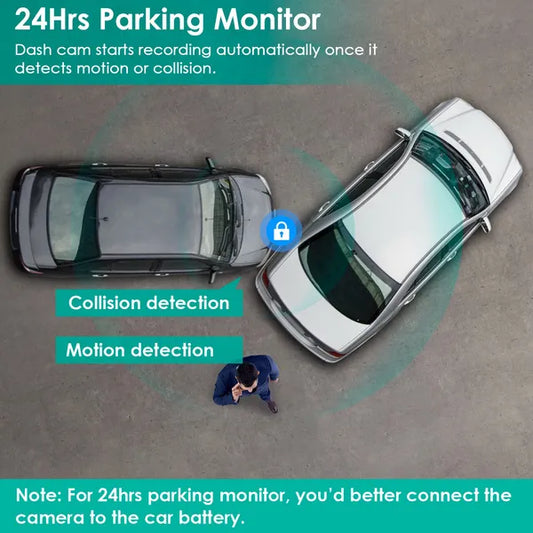
A multi channel dash cam is not only for professional drivers. Plenty of everyday car owners are switching to three and four channel systems because a single front camera simply does not tell the whole story anymore. Parking lot dents, rear-end collisions, cabin disputes during rideshare trips, and even staged accidents are all situations where extra camera angles genuinely protect you.
If you have ever been in a situation where you thought, "I wish I had that on camera," a three channel or four channel dash cam removes that gap. You get the evidence you need, recorded automatically, without having to think about it while you are driving.
Final Thoughts
Choosing the right dash cam setup comes down to how much coverage you actually need. A three channel dash cam covers the essentials — front, rear, and cabin — while a four channel dashcam adds an extra layer for side visibility, larger vehicles, or fleet use. Pair either option with 4K resolution, and you get footage clear enough to actually rely on when it counts.
Browse our full range of 3 channel and 4 channel dash cams below and find the setup that matches how you actually drive.